He Had to Pass a School He Wasn’t Allowed to Attend. Years Later, He Became Its Coach.

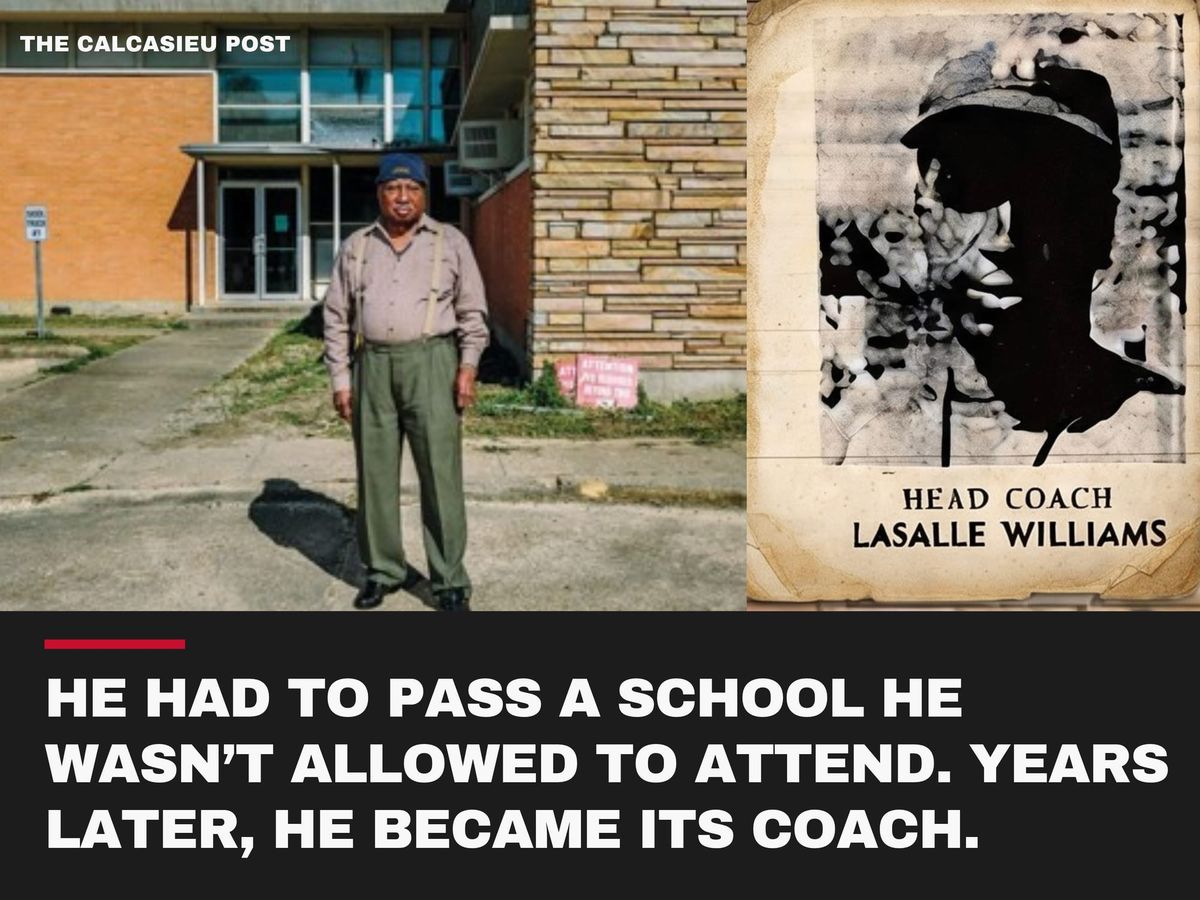
WESTLAKE, La. — Growing up in Mossville, LaSalle Williams faced a problem no child should have to solve. His community’s school ended at sixth grade. Just down the road, Westlake offered the education he needed to continue, but segregation kept its classrooms closed to Black students.
But his parents were determined that their son would receive an education.
Using a relative’s Lake Charles address, Williams continued his schooling across the Calcasieu River. He later recalled officials watching school buses and expelling students whose actual residences were discovered. But Williams had something that made him difficult to overlook.
He could run.
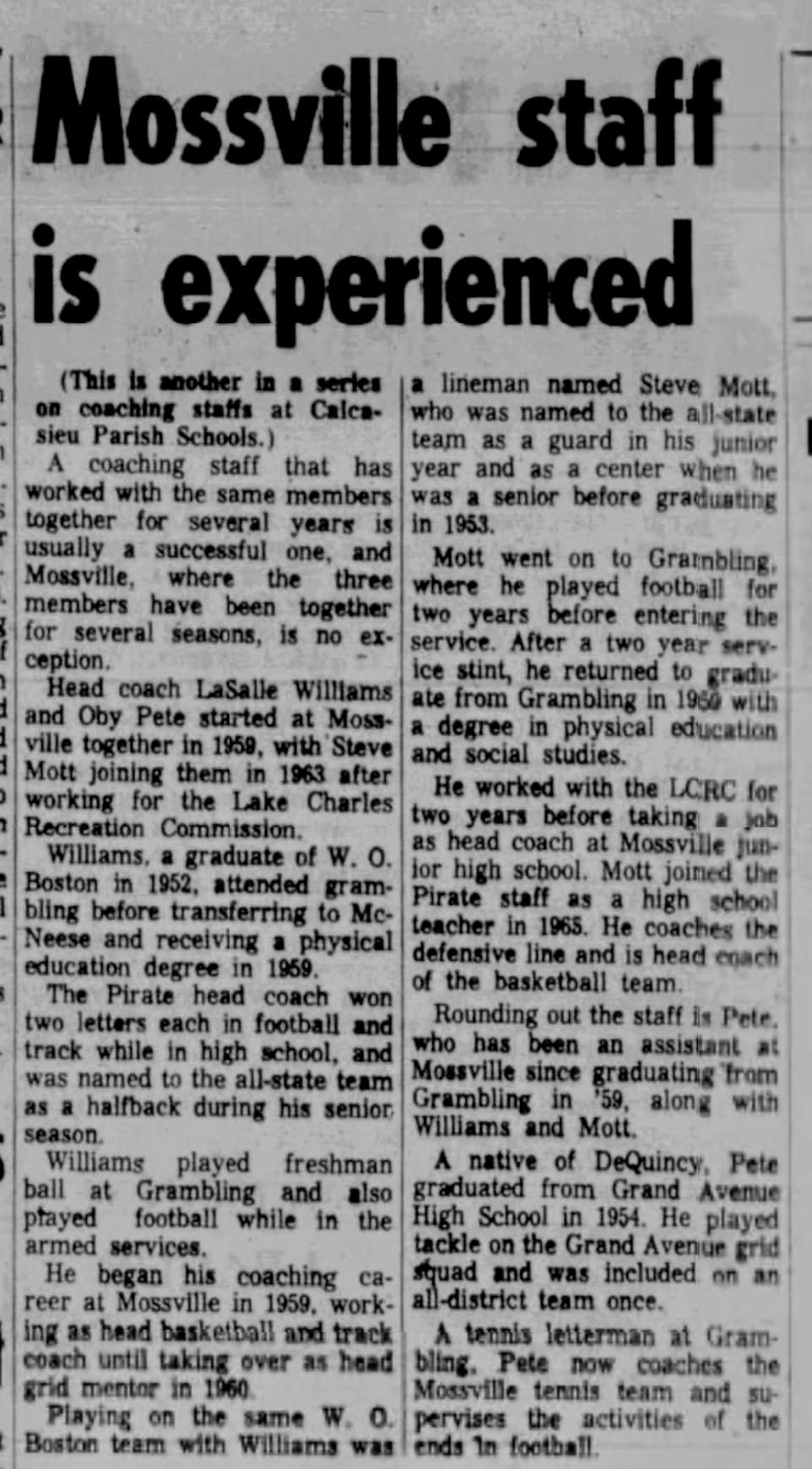
His talent on the track earned him scholarship opportunities. After military service, he attended Grambling and eventually McNeese, earning his degree before returning to the community that raised him.
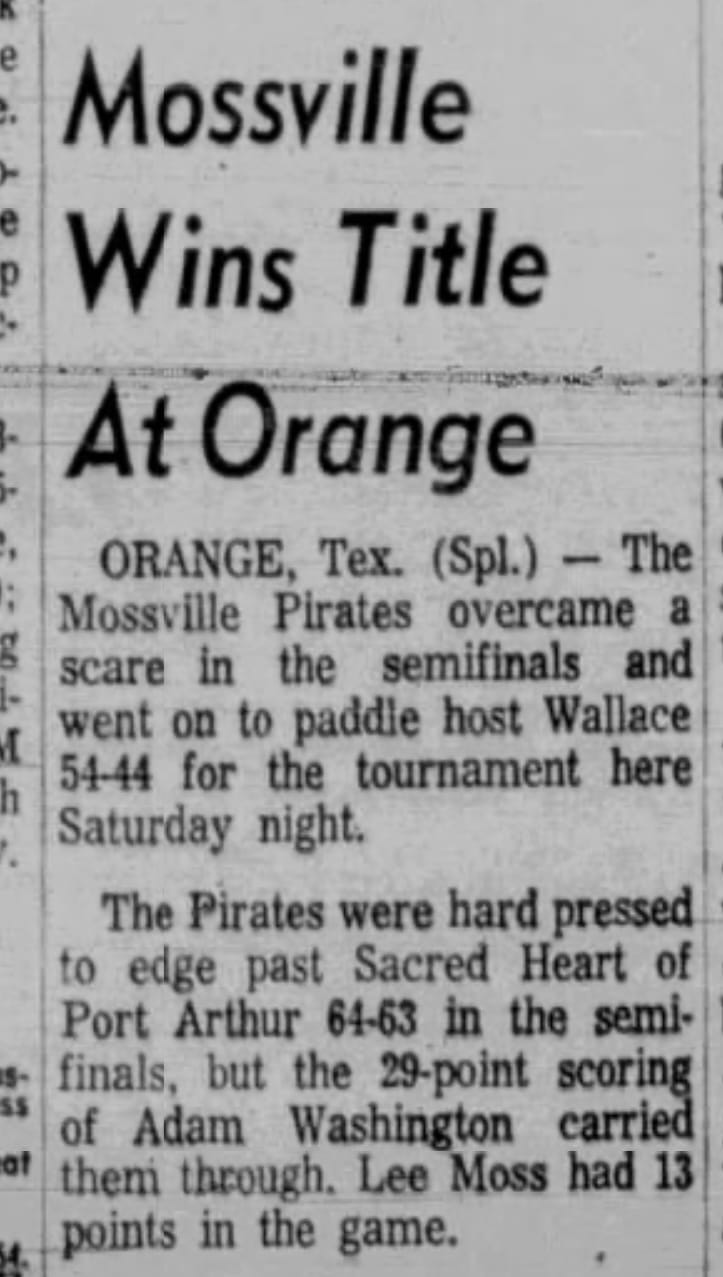
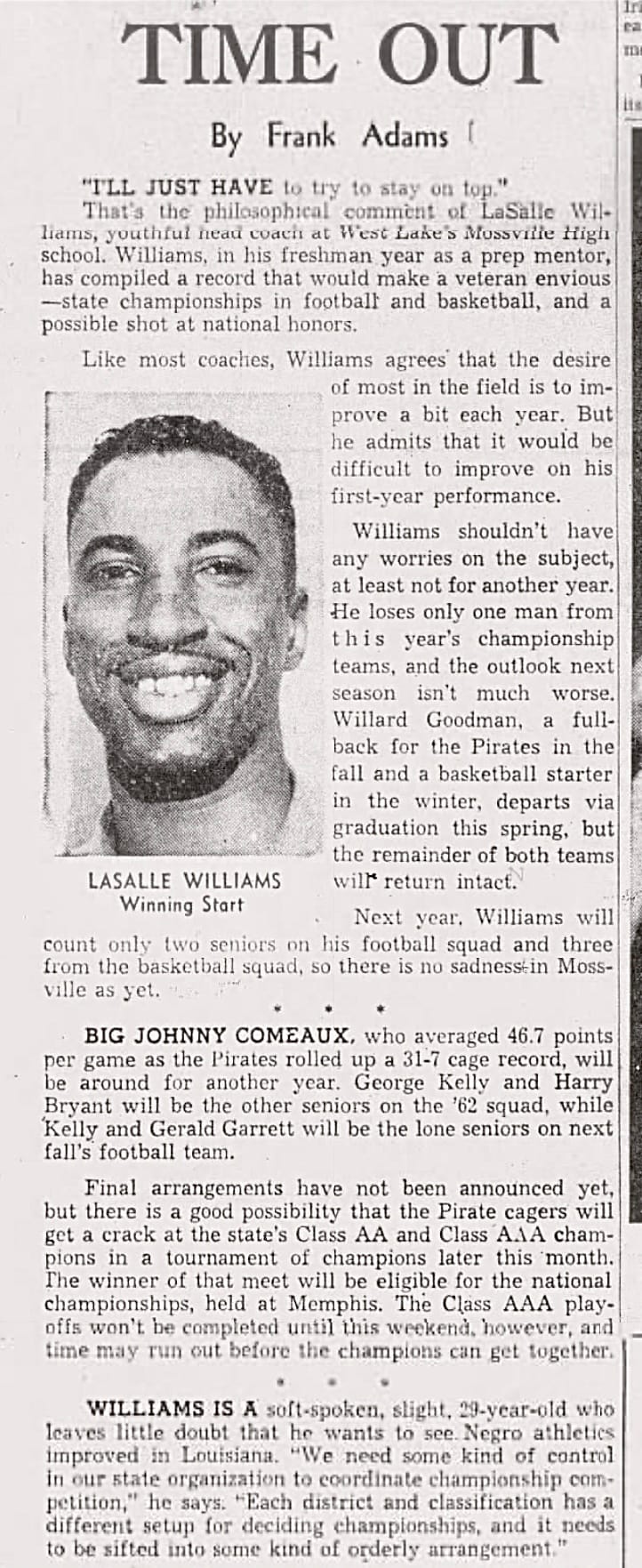
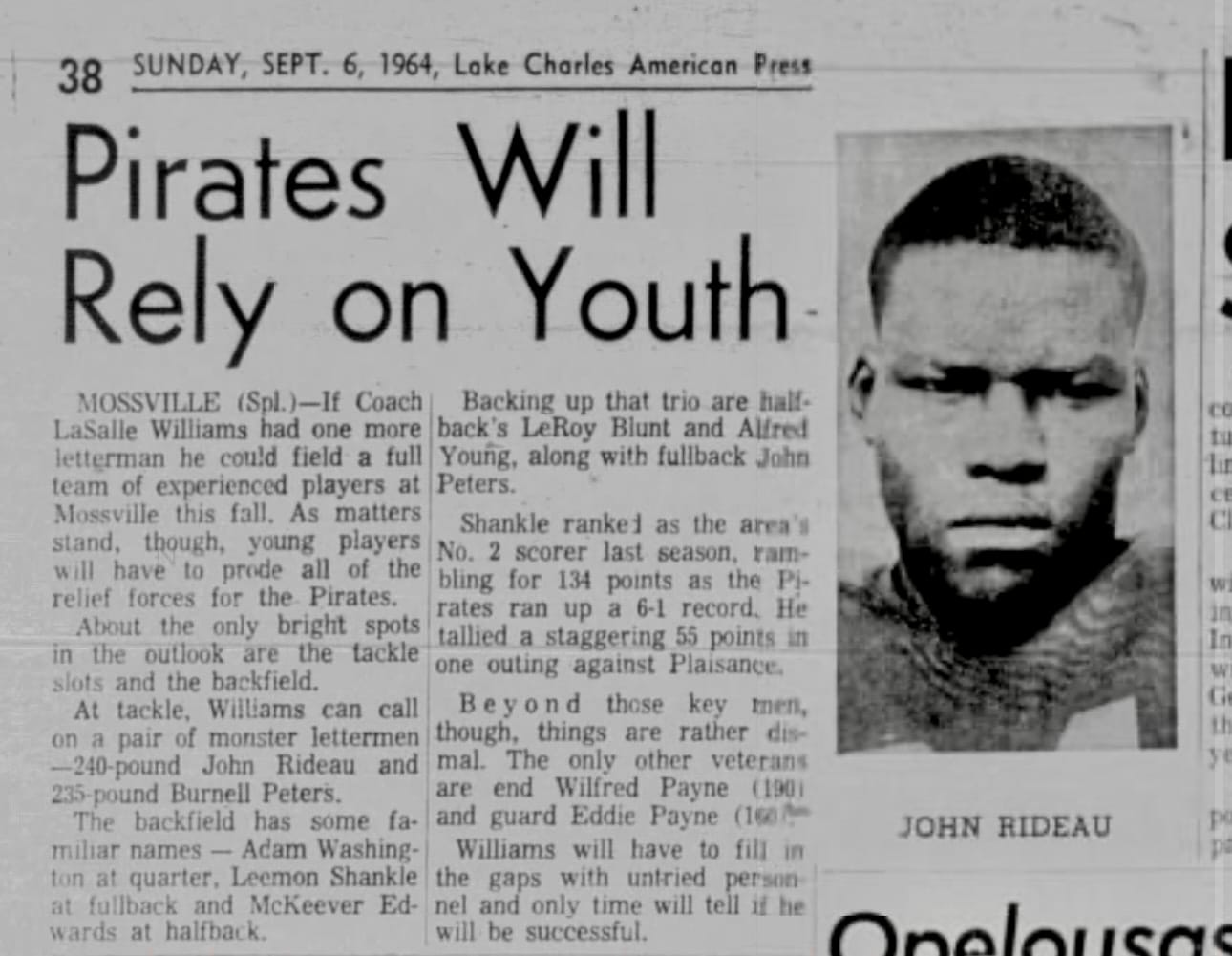
By 1959, Williams was coaching at Mossville High School. In 1960, the Pirates won the Louisiana Interscholastic Athletic and Literary Organization’s Class A state football championship. They also captured a state basketball championship, achievements celebrated in a March 8, 1961, Lake Charles American Press profile of their 29-year-old coach.
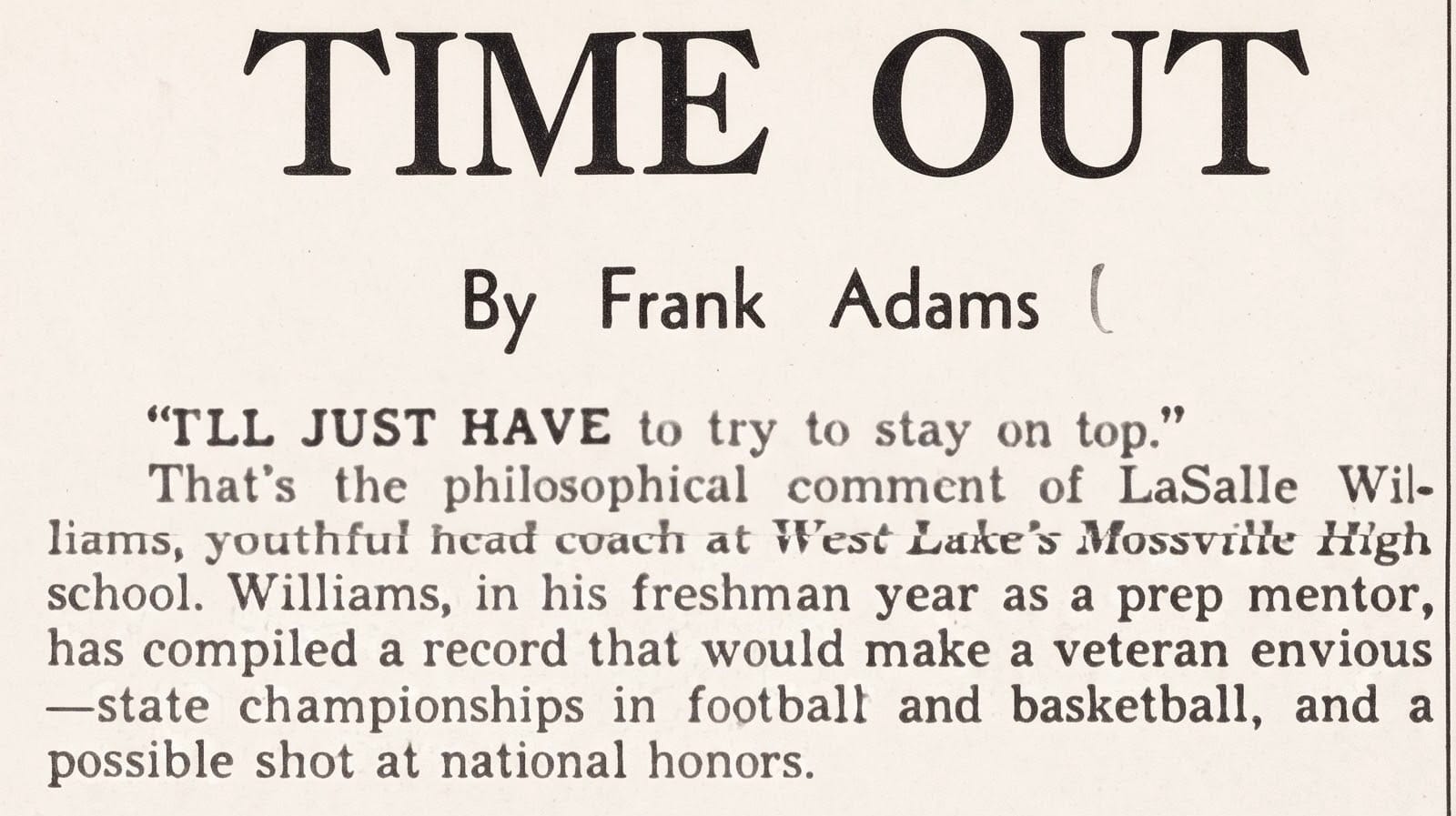
Black schools competed in a separate statewide athletic system, building their own rivalries, traditions and championship histories.
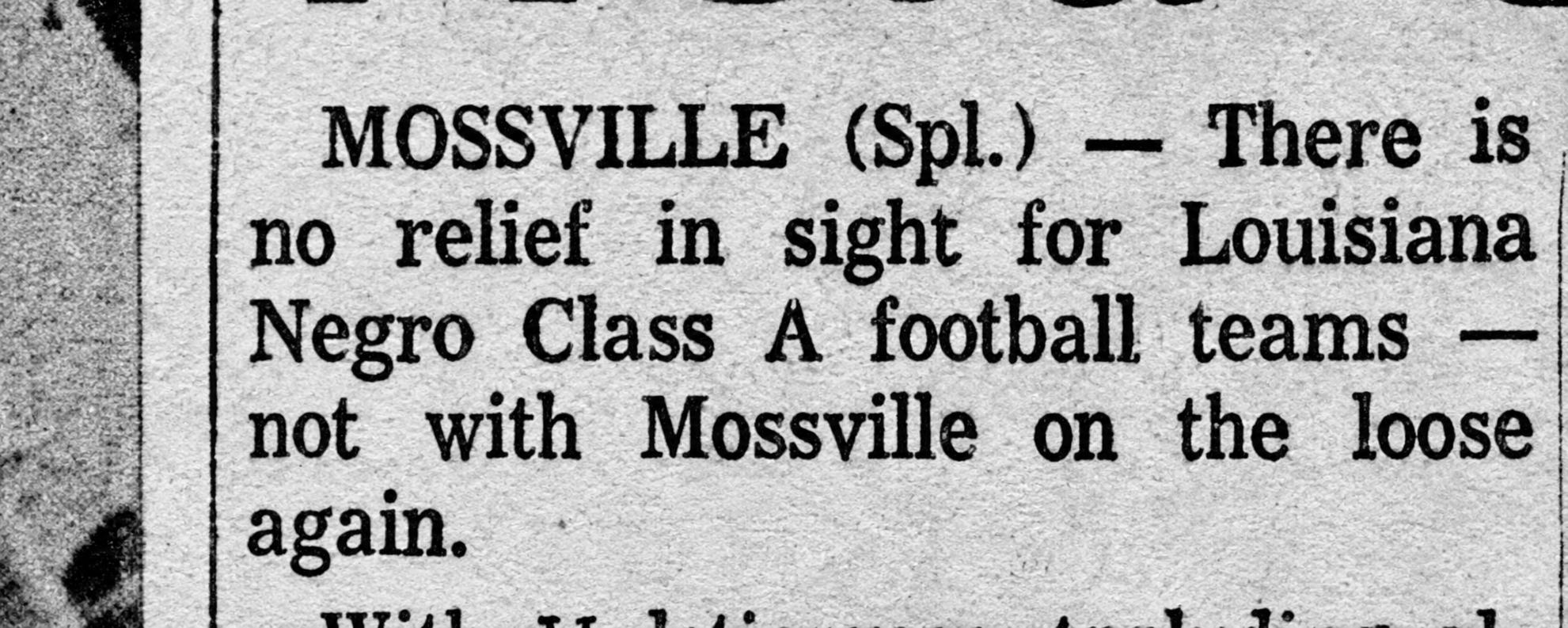
When Calcasieu Parish began integrating its schools, Mossville High closed as a historically Black high school, ending a chapter of community pride built around the Pirates. Williams transferred to Westlake High as an assistant coach.
The school that once refused to admit him as a student now employed him as a coach.
But the transition was painful. In a 2015 interview preserved by LSU, Williams recalled ropes hanging from trees at Westlake, apparently intended to evoke lynchings. He remembered racial fights and former Mossville students gathering outside the school because they feared for the younger children.
His professional advancement brought further disappointment. Williams recalled being promised consideration for Westlake’s head coaching position, only to be told he needed a master’s degree.
So he earned one.
Then he completed another 30 graduate credits.
Westlake never selected him as head coach.
Williams continued serving children as a principal, completing a career that included 20 years in coaching and 22 years in school administration. Then, more than half a century after his first championship season, the boys came back.
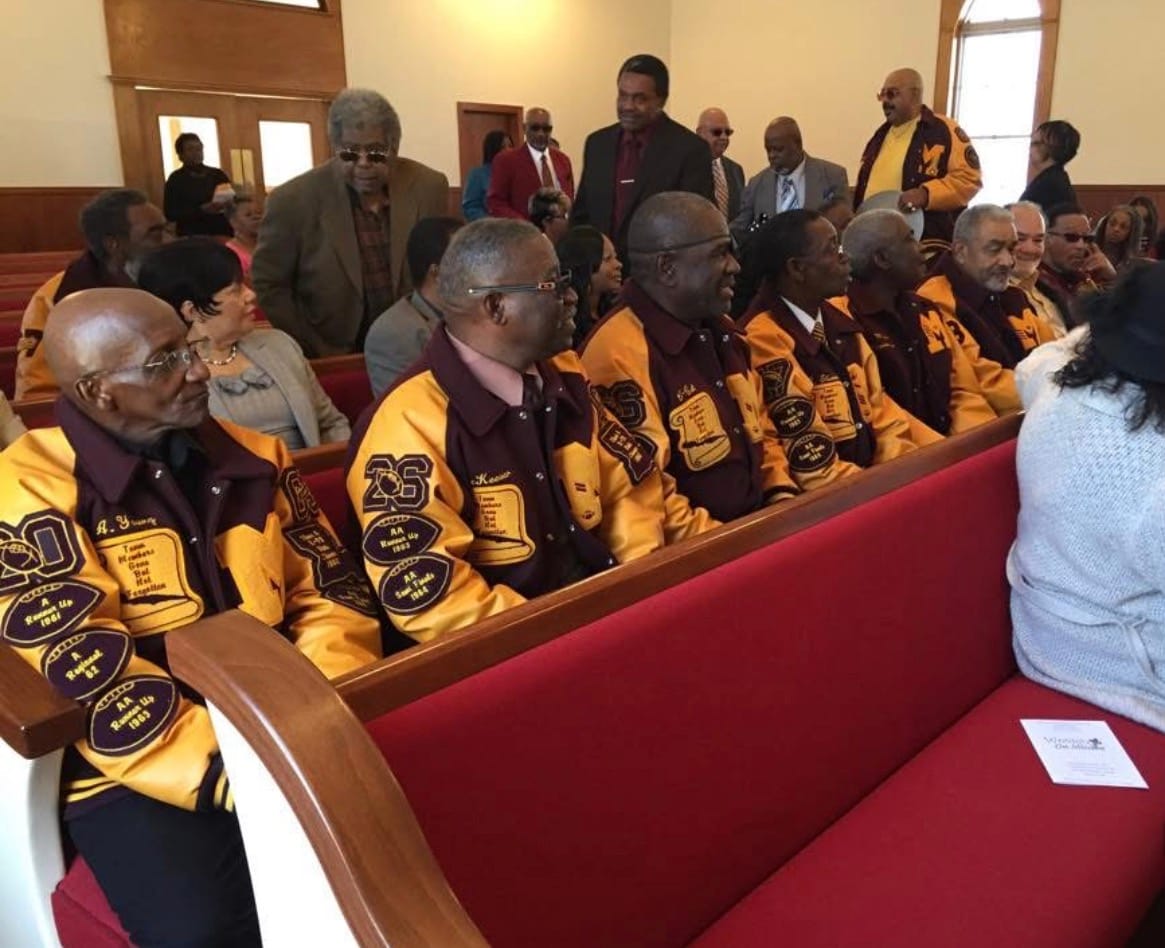
On January 25, 2015, former Mossville High football players gathered at Mount Zion Baptist Church to honor their coach. Many arrived wearing their old letterman jackets.
Decades had passed since they last played for Williams. The boys he once coached were grown men, their school was gone, and the Mossville they remembered had changed.
But they had kept those jackets.
Local officials proclaimed January 25 Coach Williams Day. Today, a road in Mossville carries his name.
For much of his life, Williams had been told where he could go, which school he could attend and what qualifications he needed to advance.
Yet on that January afternoon, his greatest accomplishment wasn’t hanging on a wall or recorded in a championship book.
It was sitting in the church pews, wearing the letterman jackets his former players had kept for decades.
They were still his Pirates. And he was still their coach.
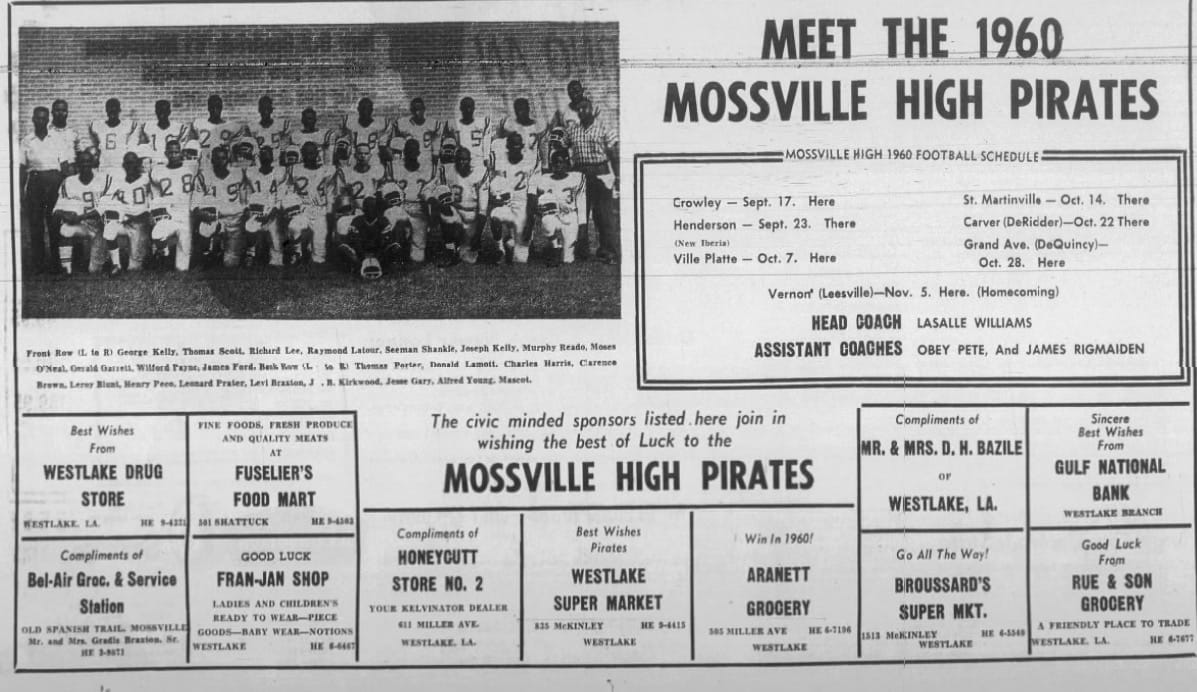
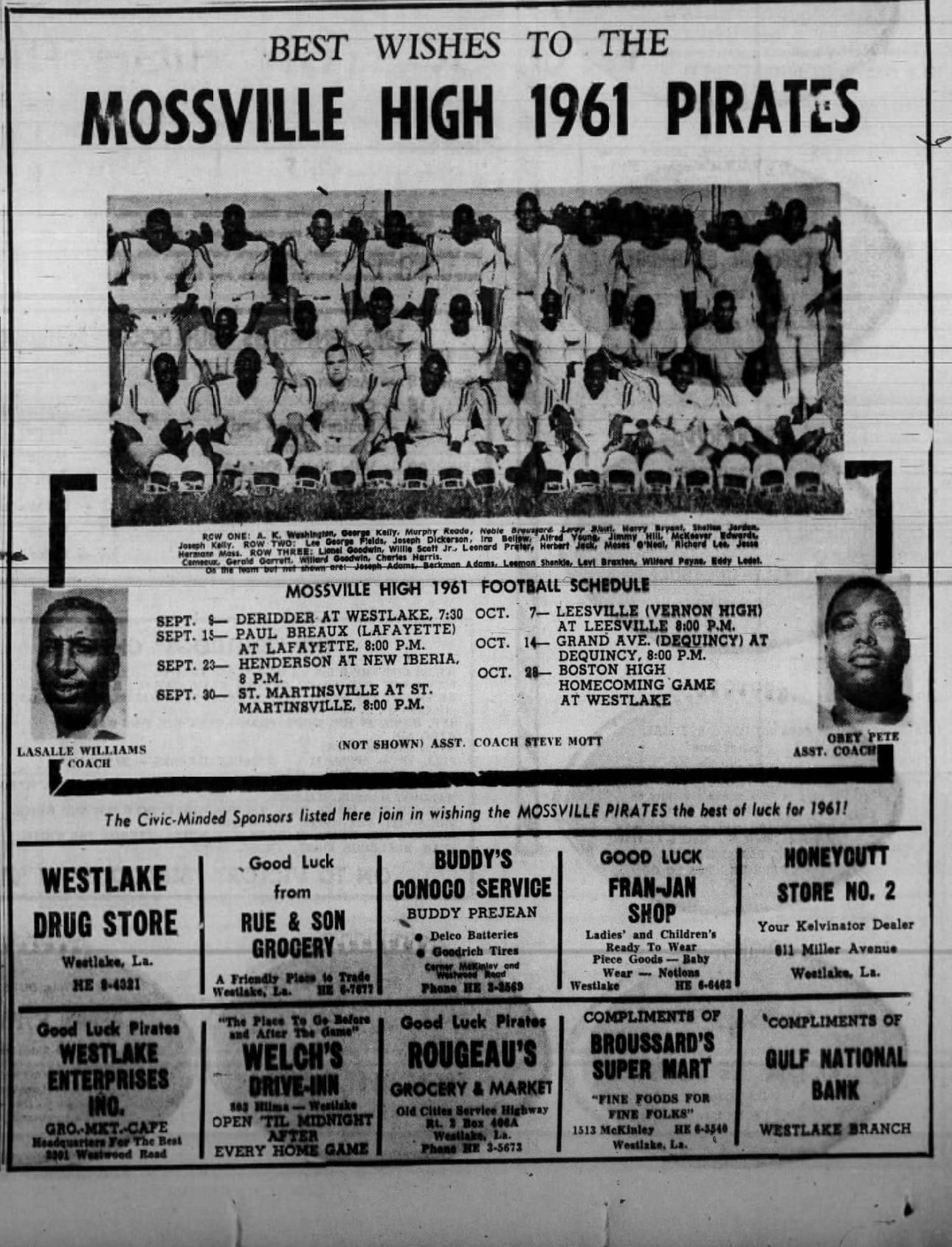
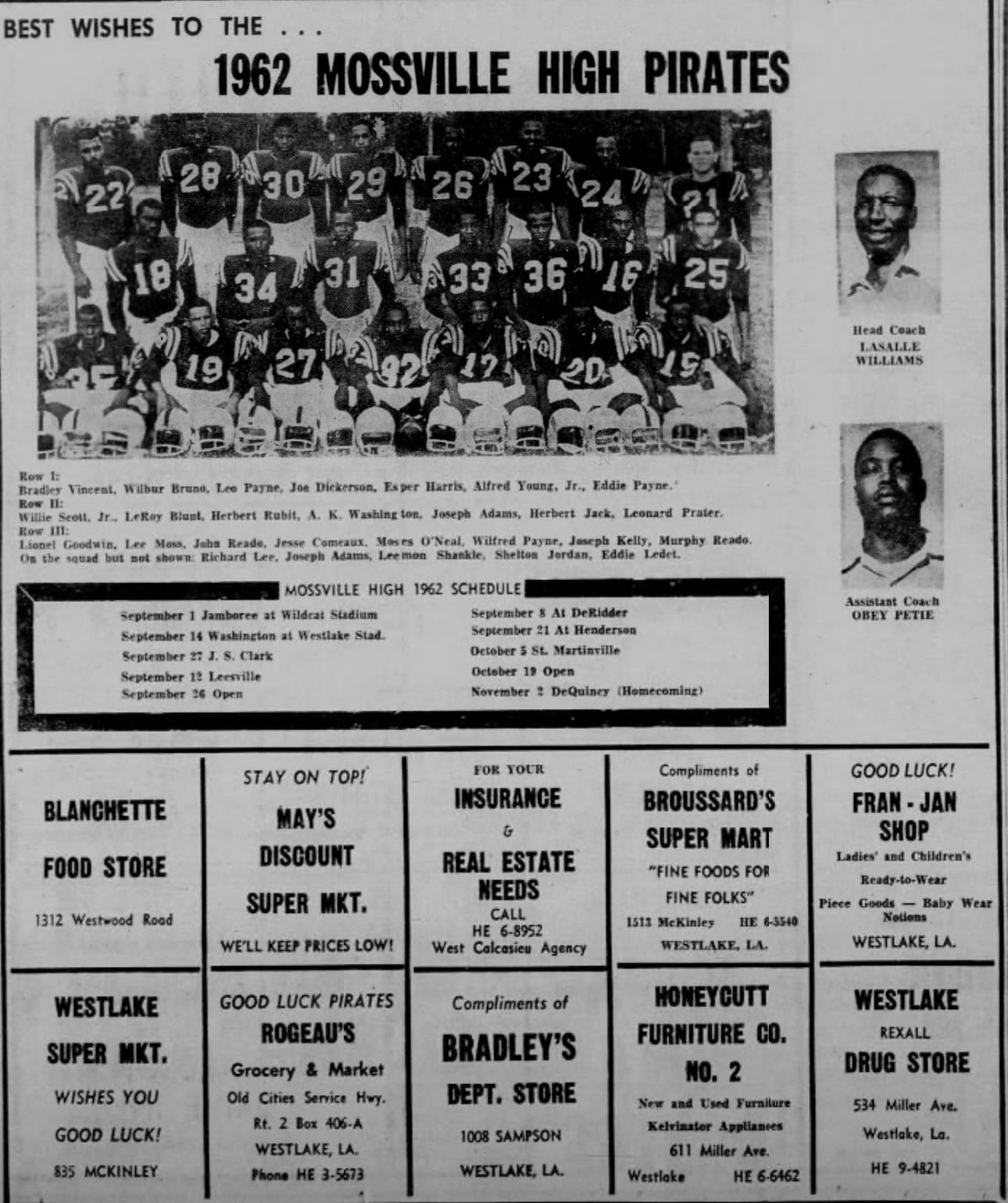
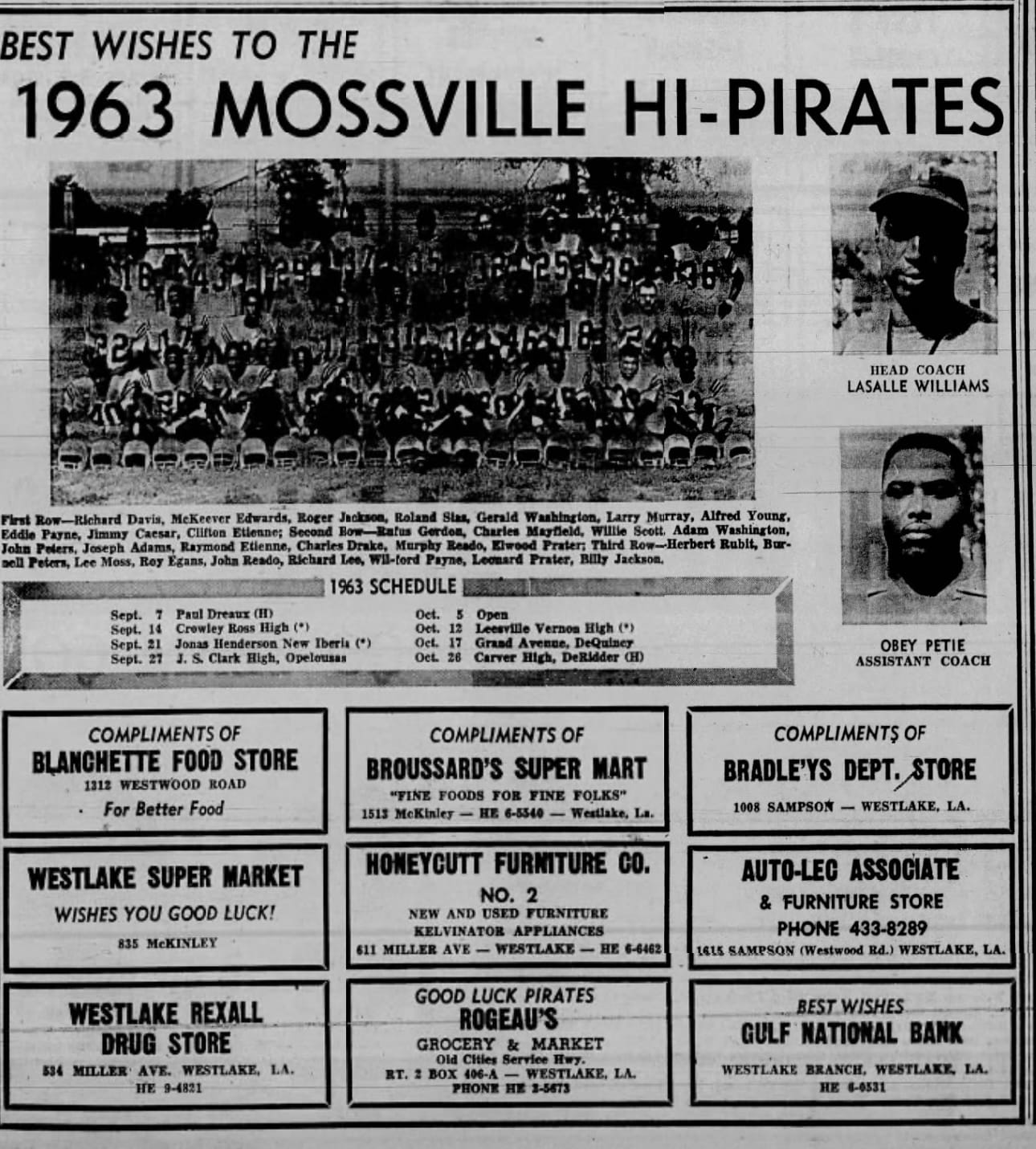
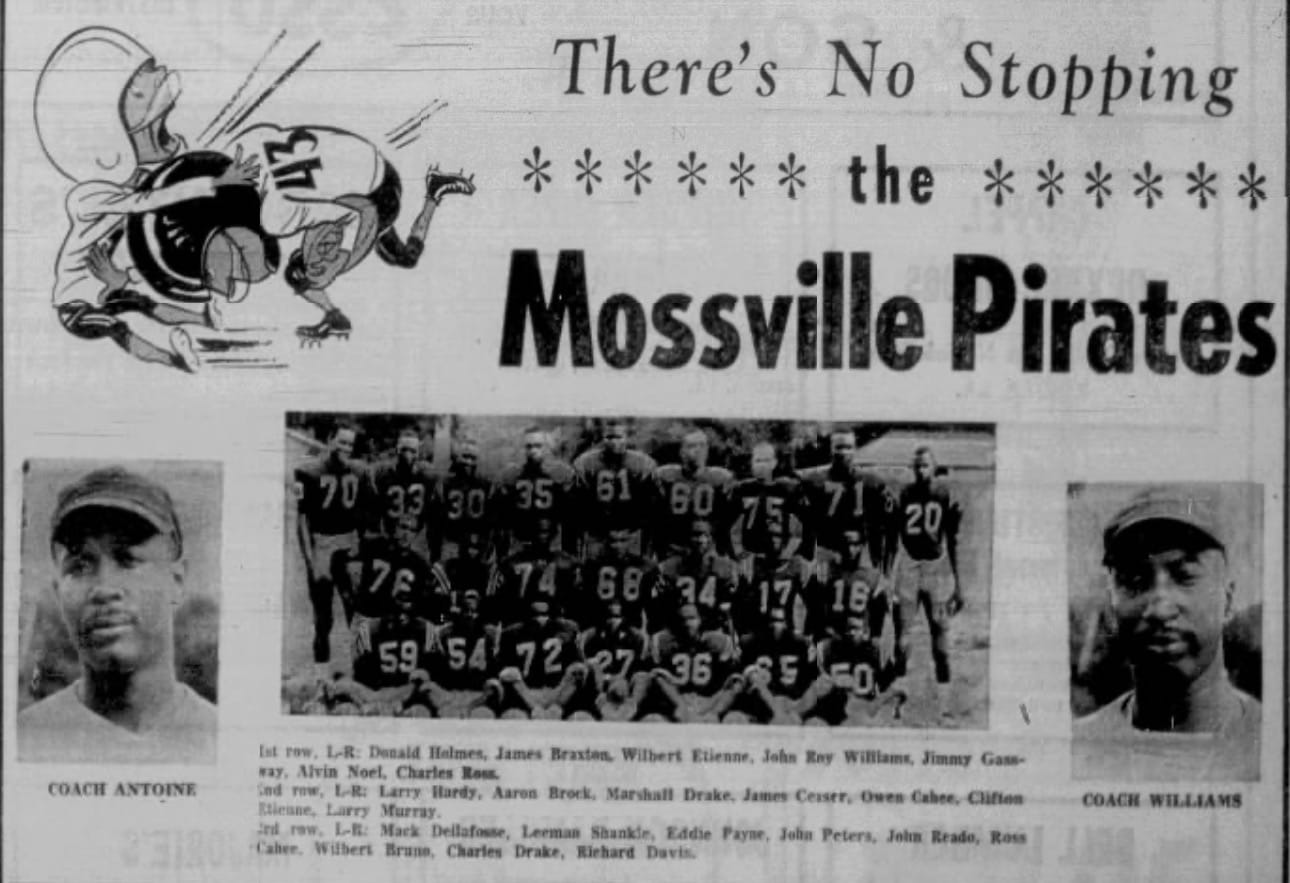
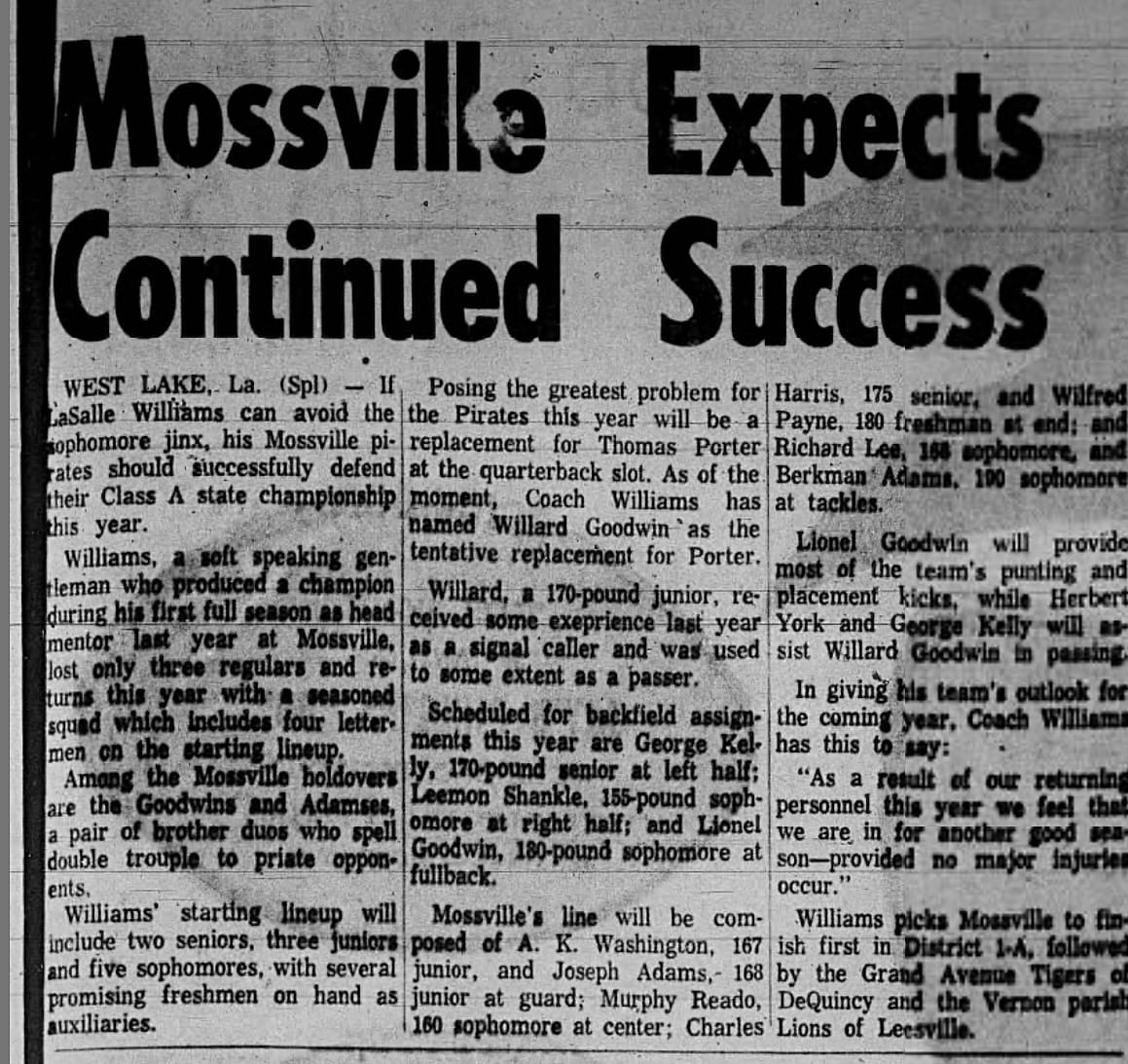
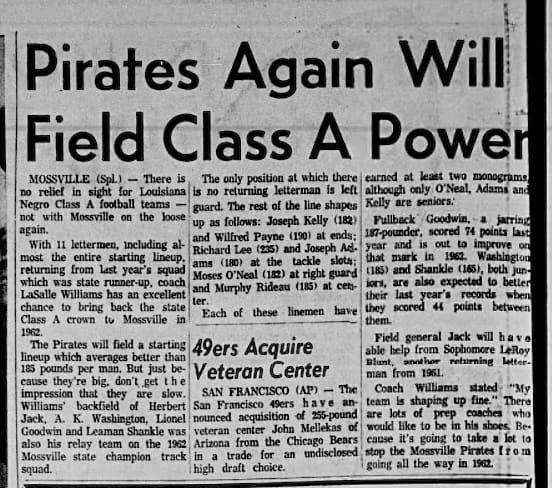
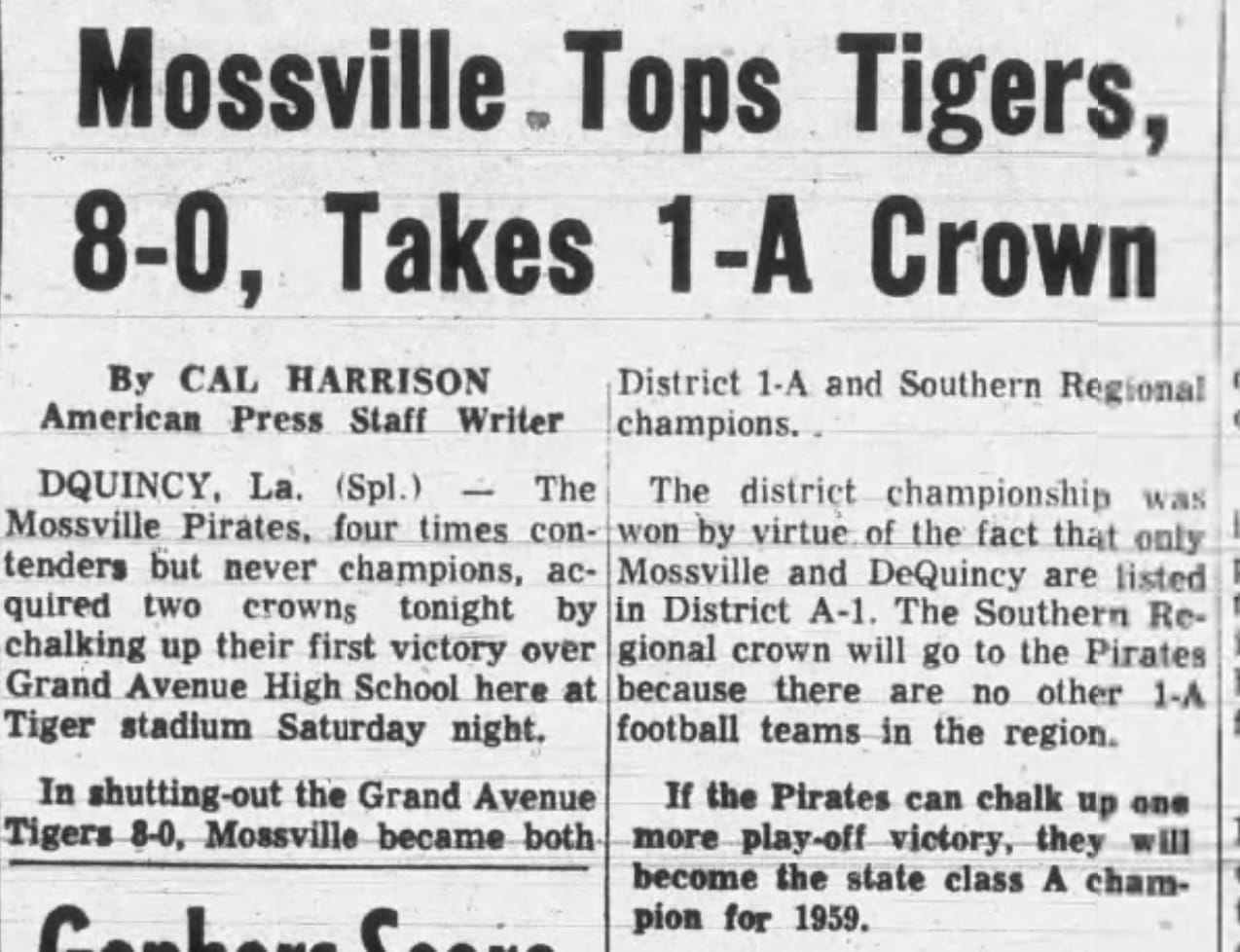
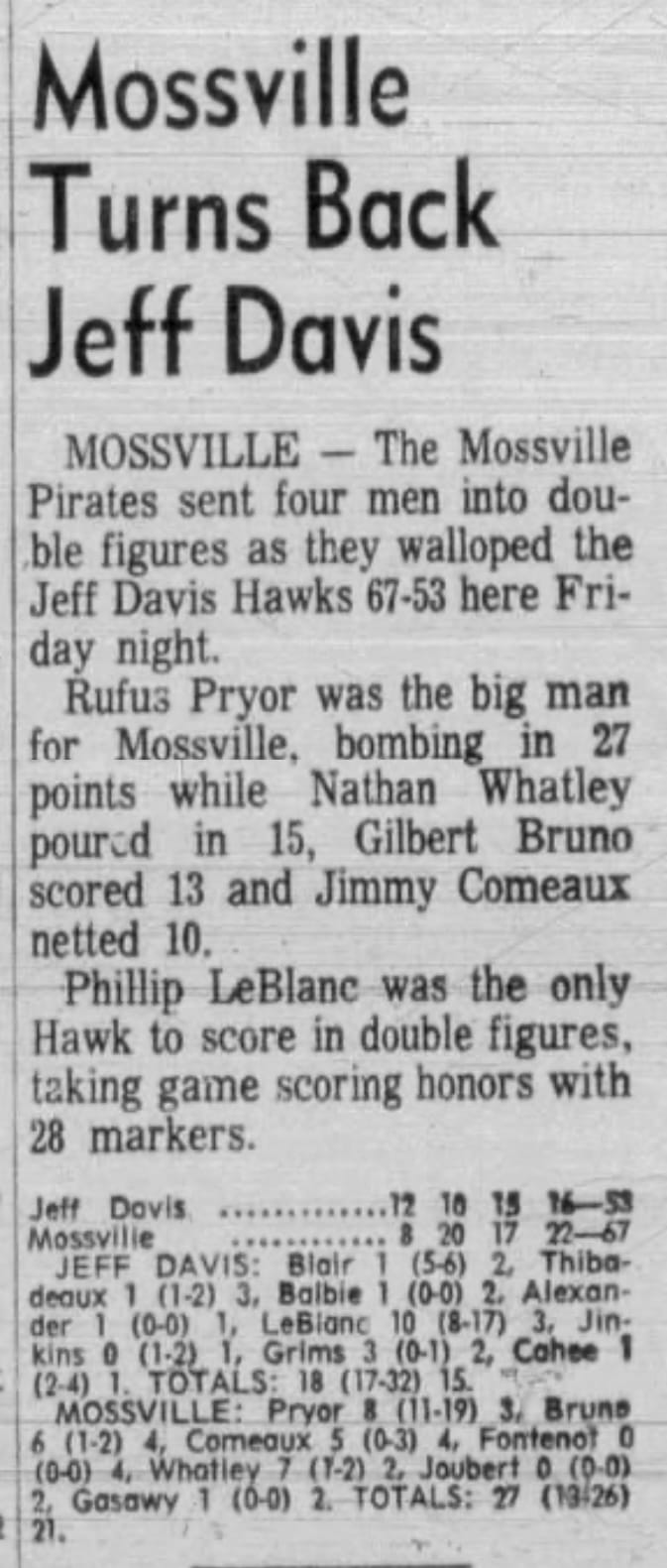
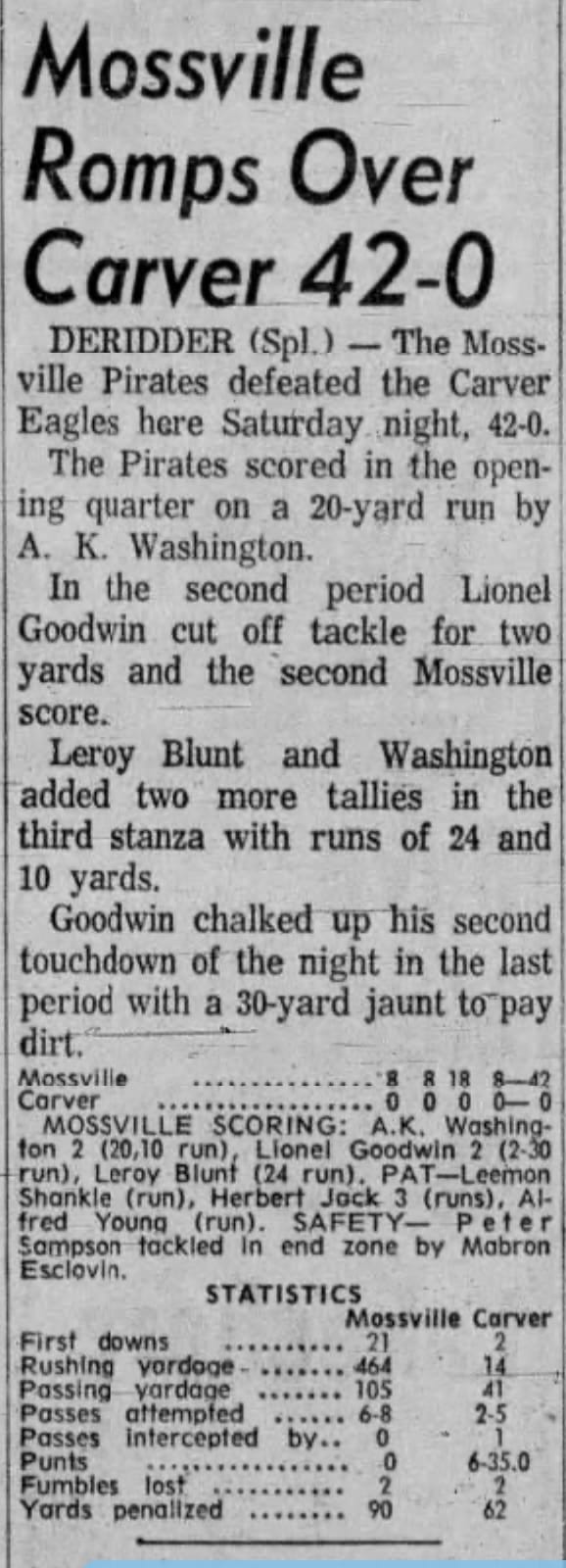
Sources: LSU Libraries’ December 7, 2015 oral-history interview with LaSalle Williams; Lake Charles American Press, March 8, 1961, September 3, 1961, September 2, 1962, and September 6, 1964; and January 2015 reporting on the Mount Zion Baptist Church tribute.