The Camera Wasn’t Working. CO₂ Was Leaking. What Changed After Sulphur’s Close Call?

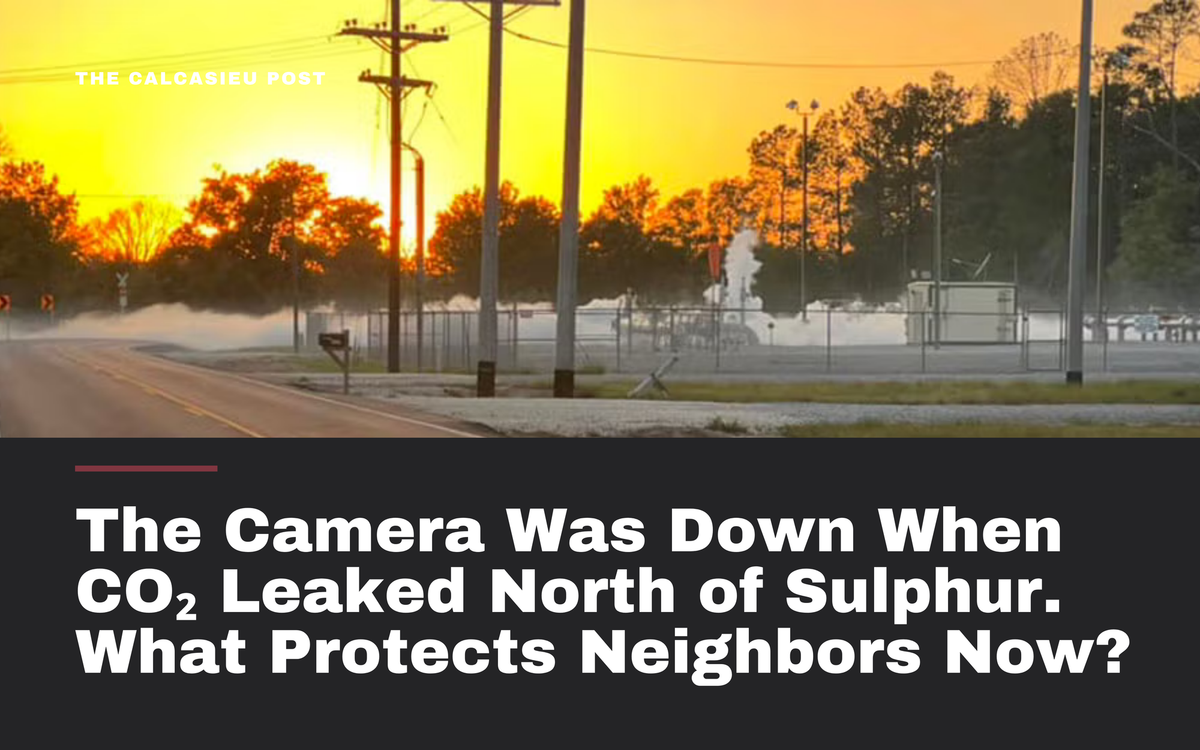
SULPHUR — An unmanned pump station. A monitoring camera that wasn’t working. A neighbor calling emergency services after calls to the pipeline company went unanswered.
Those were circumstances The Guardian reported after carbon dioxide escaped from ExxonMobil-owned Denbury’s Lake Charles Pumping Station north of Sulphur on April 3, 2024. Guardian investigation
The release stopped that evening. For the people living nearby, the more lasting question is what changed afterward.
Two hours is a long time beside a leaking pipeline
An initial National Response Center report estimated that 2,548 barrels of CO₂ escaped, recording a release beginning at 6:18 p.m. and final valve closure at 8:22 p.m.
It identified a suspected seal failure on a launcher door, while noting that the investigation remained underway.
That establishes a timeline. It does not explain why stopping the release took two hours.
What was supposed to catch it?
A camera cannot close a valve. A pressure reading cannot warn a family unless a working response system connects the warning to action.
That is why the camera outage matters—and why it cannot explain the entire incident.
The operating records reviewed here do not establish which alarms sounded, what control-room personnel saw or which valves could close remotely. Claiming that every automated safeguard failed would outrun the evidence.
The unanswered question is specific, when one layer of monitoring was unavailable, how did the remaining safeguards perform?
Repairs are the beginning of the answer
Parish officials reported no injuries or serious illnesses. Exxon said repairs were completed and promised to learn from the incident. But residents deserve to know what that lesson produced. Showing how another release would be detected sooner answers the people who live beside it.