Archaeologists Uncover Evidence of Life 1,000 Years Ago at New Lake Charles I-10 Bridge Site

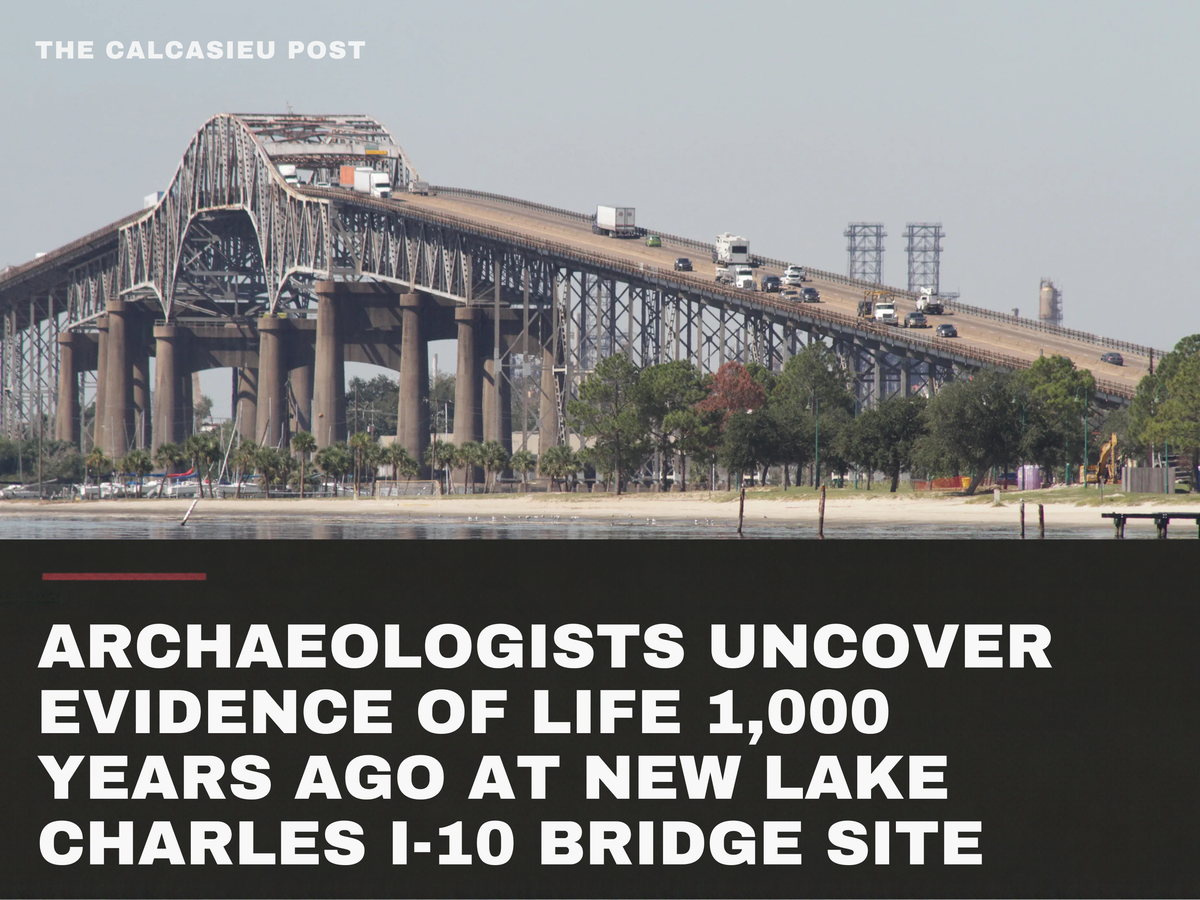
WESTLAKE, La. — Long before Lake Charles was founded, before Westlake existed and hundreds of years before European settlers arrived, Indigenous people were already living along the Calcasieu River. Now, construction preparations for Louisiana’s new Interstate 10 bridge have brought archaeologists to a location where evidence of those early inhabitants has remained buried for centuries.
So what did they actually find? Archaeologists uncovered ancient pottery and two thick layers of discarded shellfish shells, measuring approximately 12 inches and 8 inches deep. Think of it as finding the remains of meals eaten hundreds of years ago. Indigenous families gathered shellfish from the river, ate them and left the shells behind. Over time, those shells accumulated in the same places, preserving evidence of how people lived and what they ate. The shells are believed to include clams from the river’s brackish waters, where freshwater mixes with saltwater. The pottery suggests people were using this exact stretch of river between approximately A.D. 1000 and 1400 — roughly 600 to 1,000 years ago.
And that wasn’t all. At the same location, archaeologists discovered buried foundations and structural remains of the Norris Sawmill, which operated from approximately 1866 to 1903. That means one small piece of land holds evidence of two entirely different periods of Southwest Louisiana history: Indigenous communities gathering food along the river centuries ago and an industrial sawmill that helped build the region after the Civil War.
The archaeological site, known as Norris Point, was determined eligible for the National Register of Historic Places because of its historical importance. Federal transportation officials concluded that construction of the new bridge would disturb portions of the site, prompting plans for additional archaeological excavation and documentation. On October 14, 2026, Sara Hahn of Coastal Environments, Inc., and Carey Coxe of the Louisiana Department of Transportation and Development shared research about Norris Point during a presentation at the Imperial Calcasieu Museum.
The discoveries are a reminder that Southwest Louisiana’s history began long before the cities and highways we recognize today. Although archaeologists have not established which specific Indigenous tribe occupied Norris Point during that period, the pottery, discarded shells and buried structures offer a rare glimpse into the people who lived and worked along the Calcasieu River hundreds of years before the new bridge was ever imagined.