The Lake Charles Surgeon Saved by the Operation He Helped Develop

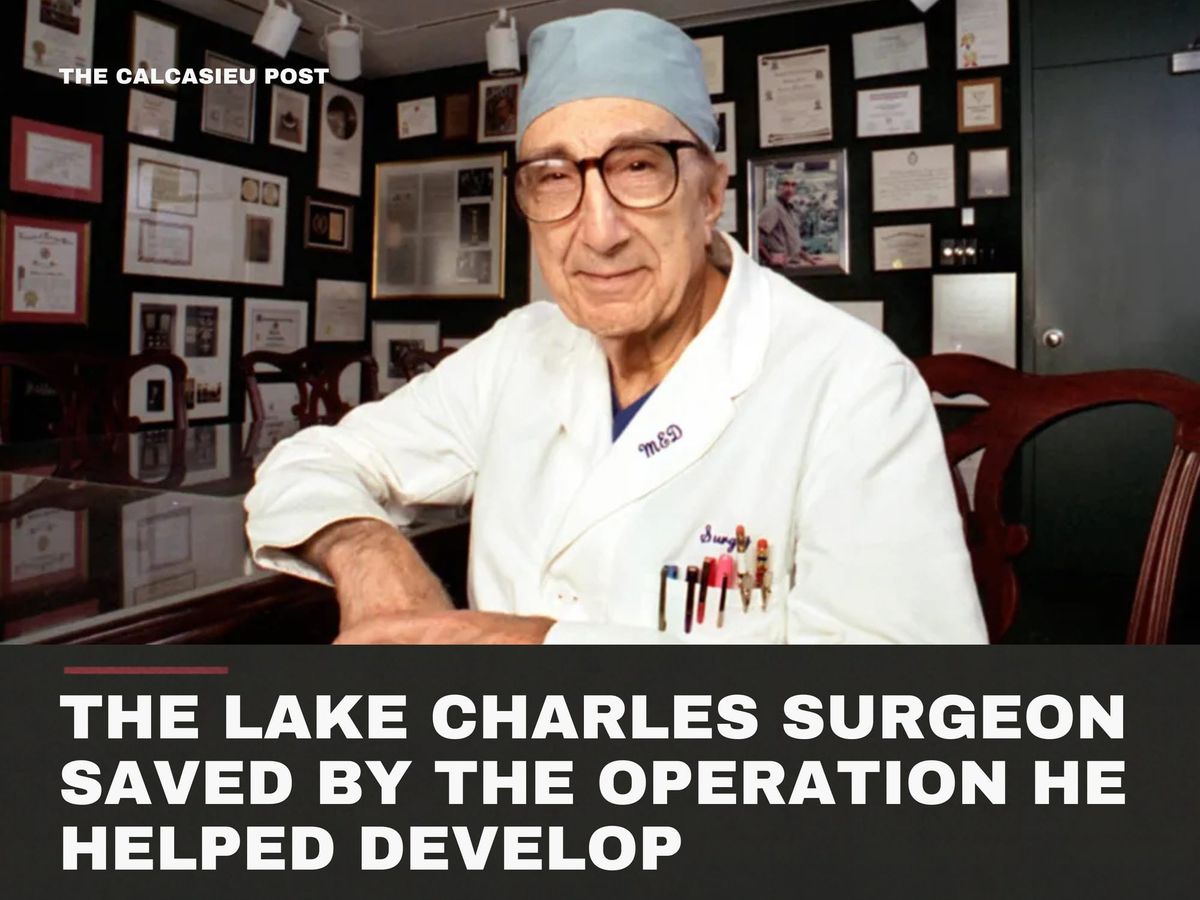
LAKE CHARLES, La. — Michael DeBakey knew how doctors repaired a torn aorta. He had helped develop the operation.
At 97, he needed it himself—and initially refused.
Born in Lake Charles in 1908 to Lebanese immigrants, DeBakey became interested in medicine listening to doctors at his father’s pharmacies. His mother taught him to sew.
In the 1950s, that skill became part of medical history. Using his wife’s sewing machine, he fashioned artificial arteries from Dacron, a synthetic fabric. The grafts helped surgeons repair blood vessels that previously offered patients little hope.
Decades later, surgeons would use that kind of graft to save his life.
On New Year’s Eve 2005, severe pain interrupted DeBakey as he prepared a lecture at home in Houston. He suspected a tear in his aorta’s inner lining. Tests confirmed it.
He feared an operation could leave him permanently disabled and initially chose treatment at home. But his condition worsened.
By February 2006, he was hospitalized and unresponsive.
According to The New York Times, his family supported surgery, but the hospital’s anesthesiologists objected, citing his earlier refusal, a do-not-resuscitate directive and the risks. His doctors disagreed about how to interpret his wishes.
An ethics committee approved proceeding. An anesthesiologist from another hospital joined the effort, and the seven-hour operation began late February 9.
Surgeons replaced the damaged portion of his aorta with a Dacron graft—the type of artificial artery he had pioneered.
Recovery required months of hospital care. By year’s end, he was working again and said he was grateful they had operated.
“If they hadn’t done it, I’d be dead,” he told the newspaper.
Sources: Lawrence K. Altman, The New York Times, December 25, 2006; National Library of Medicine; U.S. Department of Veterans Affairs.